

4
Check availability on Amazon
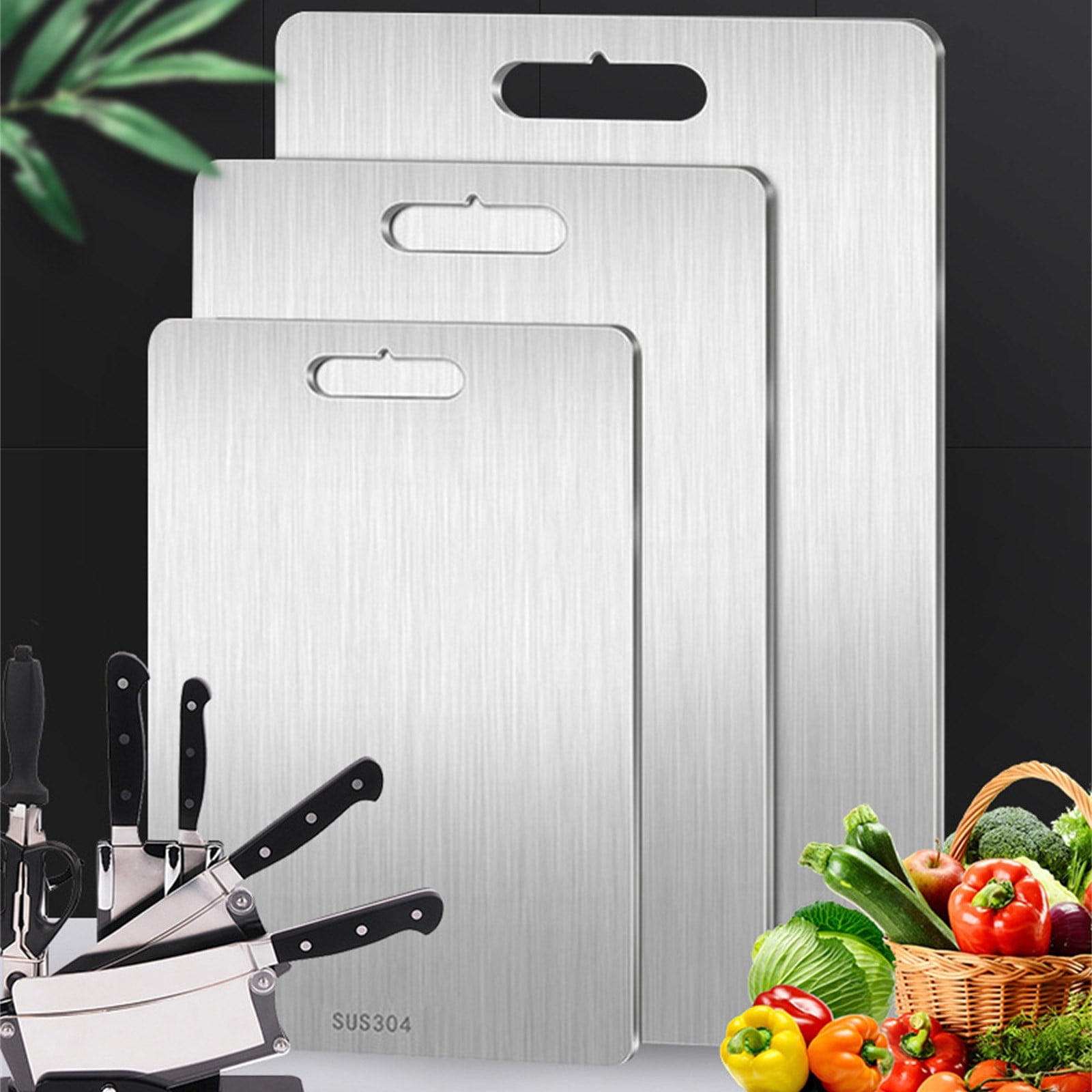
Titanium cutting boards sit at an interesting intersection of food safety, durability, and modern kitchen design. They’re often compared to wood, bamboo, or plastic—but titanium behaves very differently from all three. This article breaks down what titanium actually solves in daily cooking, where it shines, and where expectations should be realistic.
This is not a trend piece. It’s a practical, material-level look.
Why Cutting Board Material Matters More Than Most People Think
Cutting boards are one of the highest-risk cross-contamination surfaces in a kitchen. Studies consistently show that bacteria survive and migrate differently depending on board material, surface porosity, and cleaning method.
The real problem most home kitchens face isn’t knife damage—it’s moisture retention, micro-grooves, and odor absorption over time.
What Makes Titanium Fundamentally Different
Titanium is:
- Non-porous (no fibers, no grain)
- Chemically inert (doesn’t react with acidic foods)
- Naturally corrosion-resistant
- Heat-stable and dishwasher safe
Unlike wood or bamboo, it does not swell, crack, or trap moisture. Unlike plastic, it does not rely on soft polymers that develop deep knife grooves.
Double-Sided Design: Raw vs Cooked Separation
A double-sided titanium board allows functional separation, not just convenience:
- One side for raw proteins (meat, fish)
- One side for cooked or ready-to-eat foods
This matters because bacteria transfer is more about surface condition than cleaning intent. A non-porous board makes this separation more meaningful because contaminants don’t migrate internally.
Titanium vs Common Cutting Board Materials
| Feature | Titanium | Wood | Bamboo | Plastic |
|---|---|---|---|---|
| Porosity | Non-porous | Porous | Semi-porous | Semi-porous |
| Odor retention | Very low | High | Medium | Medium |
| Dishwasher safe | Yes | No | No | Sometimes |
| Warping risk | None | High | Medium | Low |
| Antimicrobial behavior | Inert & hygienic | Natural but inconsistent | Treated | None |
Titanium’s advantage is predictability. What you clean is what you remove.
Knife Wear: The Most Common Concern
A fair concern is blade dulling.
Reality:
- Titanium is harder than wood or plastic
- It can cause slightly faster edge wear over long periods
Mitigation:
- Use titanium boards for raw prep, hygiene-critical tasks, and travel
- Keep wood or rubber boards for heavy chopping if preferred
Most users end up rotating boards by task, not replacing all boards entirely.
Cleaning & Maintenance in Real Kitchens
Titanium boards:
- Rinse clean in seconds
- Don’t stain from turmeric, beetroot, or tomato
- Can go directly into the dishwasher
- Don’t retain smell from fish, garlic, or onions
This reduces the cognitive load of cleanup—no soaking, no oiling, no special care.
Health & Safety Perspective
From a food-safety standpoint, titanium offers:
- No glue layers
- No coatings
- No plasticizers
- No fiber breakdown
This makes it appealing for:
- Raw meat handling
- Immunocompromised households
- High-use kitchens
- Minimalist or hygienic setups
Who Titanium Cutting Boards Are Best For
Strong fit if you:
- Prioritize hygiene over tradition
- Cook a lot of raw protein
- Want dishwasher-safe tools
- Dislike odor retention
- Prefer modern, low-maintenance kitchens
Less ideal if you:
- Want a soft, knife-friendly chopping surface only
- Prefer rustic aesthetics
- Do heavy cleaver work daily
Long-Term Value Perspective
Titanium boards are less about luxury and more about eliminating recurring problems:
- No replacement cycle from cracking or warping
- No lingering smells
- No deep bacterial grooves
For many kitchens, they become a specialized daily tool, not just another board.
Final Takeaway
A titanium cutting board isn’t a universal replacement—it’s a precision tool for hygiene-first food prep. Its real strength lies in consistency: what you cut, clean, and separate stays exactly that.
If your priority is food safety, low maintenance, and long-term durability, titanium earns its place.
Disclosures & Notices
Affiliate Disclosure: As an Amazon Associate, I earn from qualifying purchases.
AI Image Disclaimer: Images may be AI-enhanced for illustrative clarity.
AI Content Disclaimer: This article was created with AI assistance and reviewed for neutrality and accuracy.
Kitchen Safety Disclaimer: Always follow safe food-handling practices regardless of cutting board material.