

4
Check availability on Amazon
Portable propane heaters tend to get judged by their headline BTU number, but what actually matters day to day is how controllable the heat is, how safely it operates, and where it can realistically be used. The Fitfirst portable propane heater is designed for situations where electricity isn’t guaranteed and fast, localized warmth makes a real difference.
This write-up looks at how a 6,000–9,000 BTU heater fits into common outdoor and semi-outdoor use cases—and where its limits are.
Understanding the 6,000–9,000 BTU Range (Why Two Settings Matter)
A single “high only” output can be overkill in small shelters. The dual heat settings here let you adjust to conditions:
- 6,000 BTU for maintaining comfort in a tent, deer blind, or ice shelter
- 9,000 BTU for quicker warm-ups in a garage, patio enclosure, or during sudden temperature drops
Rated coverage up to ~225 sq. ft. is realistic for spot heating—warming people and nearby surfaces rather than heating an entire open area.
Radiant Heat vs. Forced Air (Why It Feels Different)
This heater uses radiant heating, which means it warms objects and people directly instead of pushing hot air around. In practice, that means:
- Faster perceived warmth in front of the unit
- Less heat loss from wind compared to fan heaters
- Quieter operation (no blower motor)
Radiant heaters shine in campsites, hunting blinds, and garages where drafts are common.
Safety Systems: Tip-Over + ODS (Non-Negotiable Features)
Portable propane heat only makes sense with layered safety measures. This model includes:
- Tip-Over Protection: Shuts off gas if the unit is knocked or tilted
- Oxygen Depletion Sensor (ODS): Cuts gas flow if oxygen levels drop
These features are especially relevant for well-ventilated spaces like garages, workshops, RV annexes, and ice fishing shelters. They reduce risk but do not replace proper ventilation practices.
Cordless, Power-Free Operation (Why It’s Valuable)
Running entirely on propane means:
- No extension cords or generators
- Reliable heat during power outages
- True portability for camps, tailgates, and field use
A standard 1 lb propane cylinder provides up to ~3.5 hours on lower output. For longer sessions, compatibility with 20 lb tanks (via optional hose) makes it practical for all-day use.
Ignition & Daily Usability
The piezo ignition keeps startup simple—no matches or batteries. If ignition takes a few presses, that’s typically just air in the gas line clearing, which is common for portable propane units.
A built-in carry handle and compact cabinet form factor make it easy to reposition as conditions change.
Where This Heater Fits Best
Well-suited for:
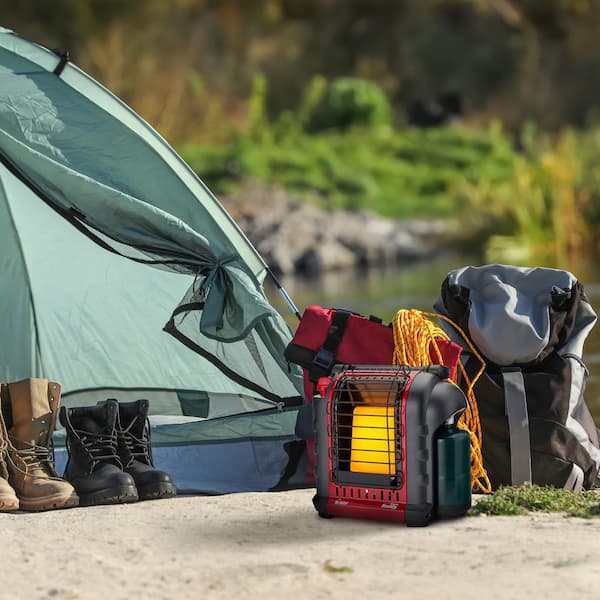
- Camping and tent heating (with ventilation)
- Ice fishing and hunting blinds
- Garages and workshops
- Patios and outdoor gatherings
- Emergency heat during outages
Less ideal for:
- Fully enclosed indoor rooms
- Large, open outdoor spaces
- Whole-home heating
Understanding these boundaries helps avoid disappointment and misuse.
Portable Propane Heater vs Electric Space Heater (Context)
| Feature | Propane Heater | Electric Heater |
|---|---|---|
| Electricity needed | No | Yes |
| Heat style | Radiant | Convection |
| Outdoor use | Excellent | Limited |
| Emergency use | Strong | Weak |
| Ongoing cost | Propane | Electricity |
For off-grid or emergency scenarios, propane remains one of the most reliable options.
Final Perspective
The Fitfirst portable propane heater is built for situations where dependable, immediate warmth matters more than permanent installation. Its adjustable output, cordless operation, and layered safety features make it a practical tool for outdoor enthusiasts, workshop users, and emergency preparedness—when used responsibly and with proper ventilation.
As with all propane heaters, effectiveness comes from matching the tool to the environment rather than expecting it to do everything at once.
Disclosures & Notices
Affiliate Disclosure: As an Amazon Associate, I earn from qualifying purchases.
AI Image Disclaimer: Images may be AI-enhanced for clarity or illustrative purposes.
AI Content Disclaimer: This article was created with AI assistance and reviewed for neutrality and accuracy.
Safety Disclaimer: Propane heaters must be used according to manufacturer instruct

Research the best portable propane heaters
Spend a few minutes for better results
ChatGPT can make mistakes. Check important info.