

4
Check availability on Amazon
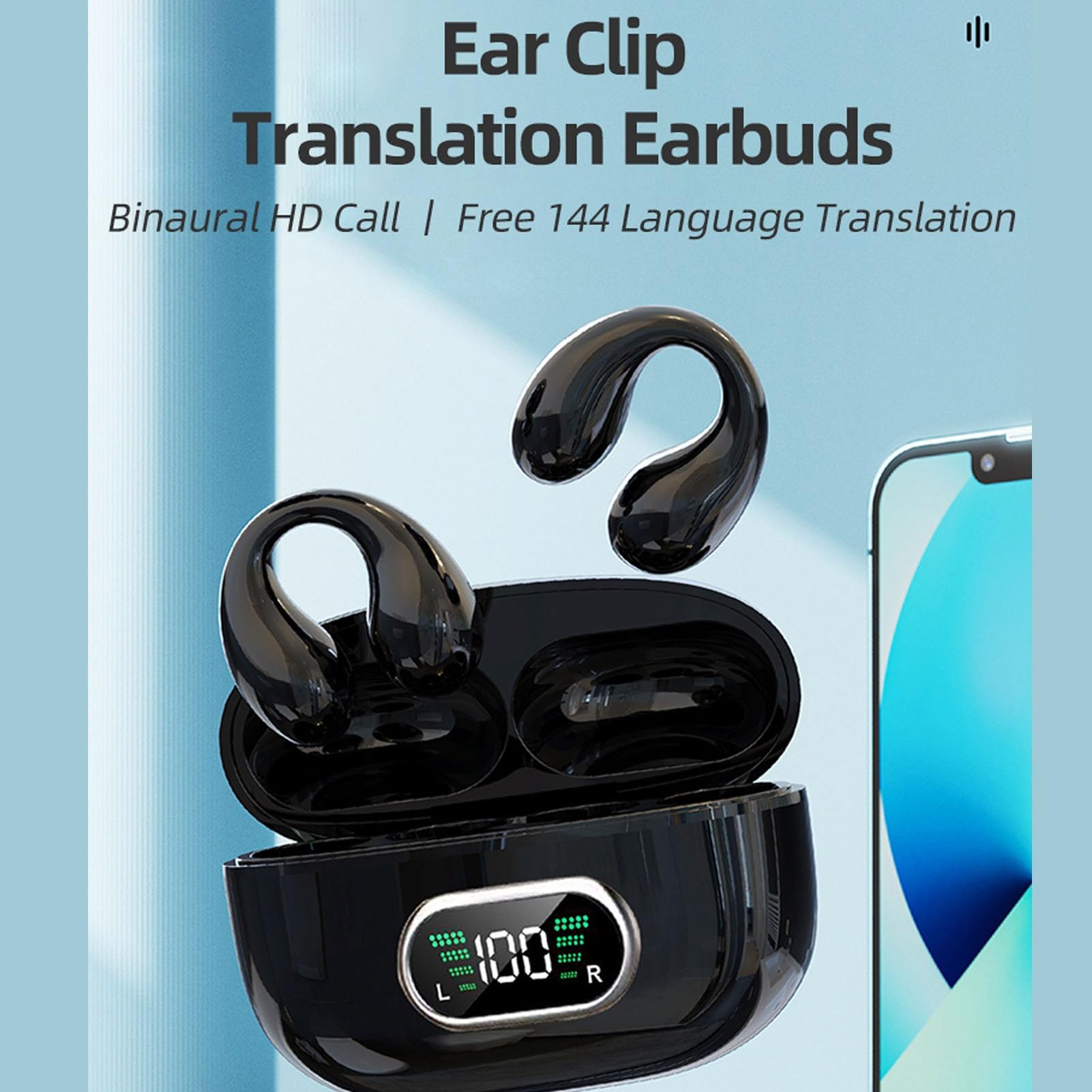
Real-time translation earbuds promise something ambitious: natural conversation across language barriers without pulling out a phone. In practice, these devices work best when you understand how they’re meant to be used and what problems they realistically solve.
This article looks at AI translation earbuds from a use-case and expectation standpoint, rather than treating them like magic language devices.
What “Real-Time Translation” Means in Everyday Use
Despite the marketing, translation earbuds are not telepathic interpreters. They rely on:
- Microphone input
- Cloud or on-device AI processing
- A paired phone or app (in most scenarios)
In real conversations, they work best for:
- Short exchanges
- Travel situations (directions, check-ins, basic help)
- Structured conversations rather than rapid debates
They are less effective in loud, overlapping group discussions or highly technical conversations.
164 Languages: Breadth vs Depth
Supporting many languages is valuable—but it’s important to separate coverage from accuracy.
In practice:
- Major languages (English, Spanish, French, German, Chinese, Japanese, Korean) tend to perform best
- Less common languages or accents may rely on broader linguistic models
- Translation quality depends heavily on clear speech and pacing
Think of language count as reach, not a guarantee of equal fluency across all languages.
Translation Modes That Matter Most
These earbuds usually shine in a few specific modes:
🔹 Two-Way Conversation Mode
Each speaker talks in turn, allowing near-real-time translation with a slight delay. Best for:
- Travel conversations
- One-on-one exchanges
- Customer service interactions
🔹 Call & Video Translation
Sharing a link to enable translated calls is useful for:
- Remote work conversations
- Family calls across language barriers
- Simple business coordination
🔹 AI Chat Mode
More of a language practice and assistance feature than a translation necessity—useful for learning or quick explanations.
Open-Ear Clip-On Design: Comfort With Trade-Offs
The open-ear, clip-on style prioritizes awareness and comfort over isolation.
Advantages
- You can hear surroundings (important for travel safety)
- Less ear fatigue during long use
- Secure fit for walking or light activity
Trade-offs
- Less bass and audio isolation
- Not designed for immersive music listening
- Translation clarity depends more on microphone quality than speaker power
This design suits translation and calls, not audiophile listening.
Bluetooth 6.1 & Connectivity: Why It Matters (A Bit)
While Bluetooth versions are often over-marketed, stability does matter for translation devices.
In practice, newer Bluetooth helps with:
- More stable connections in crowded environments
- Reduced interference
- Better handling of simultaneous audio + data
That said, translation quality depends more on AI processing and network quality than Bluetooth alone.
Battery Life: Why Long Playback Is Useful Here
Translation devices drain power faster than regular earbuds due to:
- Constant microphone use
- Processing and data transmission
Extended battery life is helpful for:
- Full travel days
- Conferences or multi-hour outings
- Not worrying about mid-conversation shutdowns
The charging case essentially turns this into an all-day device, not just a quick-use gadget.
Who Translation Earbuds Make Sense For
Good fit if you:
- Travel internationally
- Communicate regularly across language barriers
- Want hands-free translation instead of phone apps
- Prefer situational awareness over noise isolation
Less ideal if you:
- Expect professional interpreter accuracy
- Need flawless translation in loud group settings
- Want premium music sound quality
- Prefer offline-only translation
Translation Earbuds vs Phone Translation Apps
| Aspect | Translation Earbuds | Phone App |
|---|---|---|
| Hands-free | Yes | No |
| Speed of interaction | Faster | Slower |
| Convenience | High | Medium |
| Accuracy ceiling | Similar | Similar |
| Situational awareness | Better | Depends |
The main advantage isn’t better translation—it’s ease of use during conversation.
Final Perspective
AI translation earbuds are best understood as conversation facilitators, not perfect interpreters. When used with clear expectations—short exchanges, turn-taking, reasonable pacing—they can dramatically reduce friction when communicating across languages.
For travelers, multilingual households, and global professionals, this category offers practical convenience, especially when hands-free interaction matters more than absolute linguistic precision.
Disclosures & Notices
Affiliate Disclosure: As an Amazon Associate, I earn from qualifying purchases.
AI Image Disclaimer: Images may be AI-enhanced for clarity or illustrative purposes.
AI Content Disclaimer: This article was created with AI assistance and reviewed for neutrality and accuracy.
Language Disclaimer: Translation accuracy varies by language, accent, speech clarity, and network conditions.