Replacement cover panel for tankless RV water heaters — fit, durability, and real-world install considerations

4
Check availability on Amazon
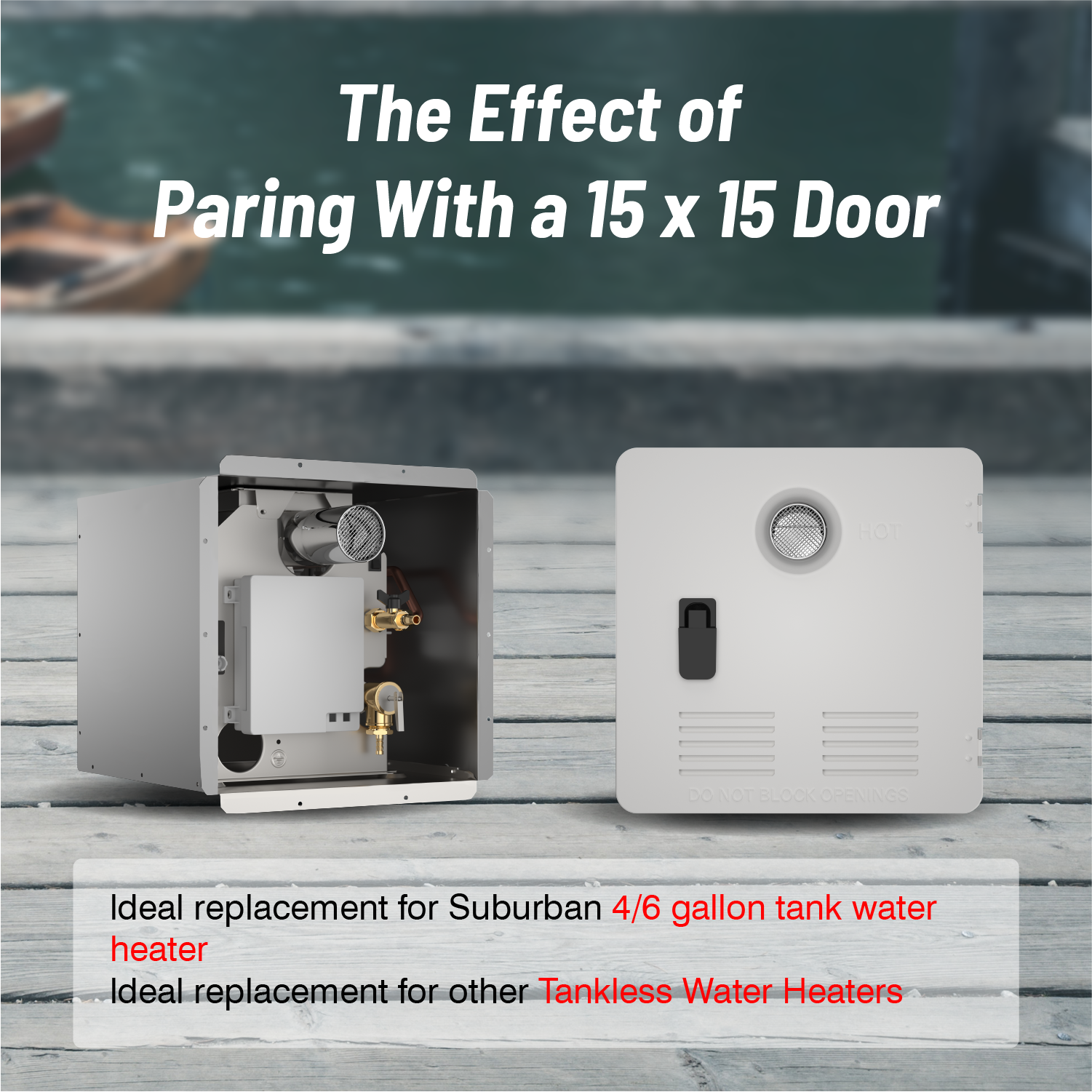
Replacing an RV water heater access door isn’t glamorous—but it’s one of those parts that quietly protects a critical system from weather, vibration, and road debris. A properly sized, well-sealed door can extend the life of your tankless heater and prevent moisture-related issues that are expensive to diagnose later. Here’s what matters when you’re choosing a 15 × 15 inch RV water heater door, and how this style performs in real use.
Why the Door Matters More Than You Think
The exterior door does more than cover an opening:
- Weather barrier: Keeps rain, dust, and road spray out of the combustion and control areas.
- Thermal stability: Reduces cold air intrusion that can affect ignition and efficiency.
- Safety during travel: A rigid, flush panel minimizes snagging and rattling on rough roads.
If your current door is warped, rusted, or loose, replacing it is preventative maintenance—not cosmetic.
Fit & Compatibility: Getting the Size Right
This door size (15″ × 15″) is commonly used across mainstream 6 / 10 / 12-gallon RV tankless and traditional water heater cutouts. That said, measurements should be confirmed from the existing opening, not the old door (which may be bent).
Good signs you’ve got the right size:
- Square opening with no prior modifications
- Original door measured edge-to-edge at ~15 inches
- No need for trimming or adapter frames
A true drop-in replacement saves time and avoids compromising the RV wall seal.
Construction Quality: Why Galvanized Steel Wins
This style uses galvanized steel with one-piece stamped forming, which offers several practical benefits:
- Corrosion resistance: Galvanization + waterproof coating helps prevent rust in humid or coastal climates.
- Impact strength: ~1.2 mm thickness resists dents from kicked-up gravel.
- Longevity: Less flexing over time compared to thin aluminum panels.
For full-time RVers or frequent travelers, this construction matters more than weight savings.
Recessed Flat Design vs Convex Doors
A recessed, flush profile isn’t just about looks:
- Reduces water pooling during rain
- Lowers the chance of catching on brush, covers, or storage doors
- Makes cleaning and inspection easier
Convex doors can trap water at the edges; flat designs tend to age better in real conditions.
Hinges & Latch: Small Parts, Big Difference
Road vibration is brutal on exterior hardware. Reinforced steel hinges and latches:
- Stay closed on gravel or mountain roads
- Reduce rattling noises while driving
- Maintain even pressure on seals for better weather resistance
This is especially important if your heater sits near the rear axle where vibration is strongest.
Installation: What to Expect
For most RVs, installation is straightforward:
- Remove the old door and clean the opening
- Inspect the sealant and replace if brittle
- Seat the new door flush
- Secure using existing mounting points
No cutting, welding, or wall modification should be required for standard setups.
Who This Door Is Best For
Ideal if you:
- Have a damaged or rusted 15″ × 15″ heater door
- Want a long-lasting, steel replacement
- Travel frequently in rain, snow, or dusty areas
Less ideal if you:
- Need a custom or oversized cutout
- Are matching a very specific cosmetic color tone
Bottom Line
A replacement RV water heater door isn’t about upgrades—it’s about protecting one of the most failure-prone systems on the exterior of your rig. A properly sized, galvanized steel, recessed door offers durability, weather resistance, and peace of mind with minimal installation effort.
If your current panel shows signs of corrosion, warping, or loose hardware, replacing it early is far cheaper than repairing heater damage later.
Disclosures & Notices
Affiliate Disclosure: As an Amazon Associate, I earn from qualifying purchases.
AI Image Disclaimer: Images may be AI-enhanced for illustrative clarity.
AI Content Disclaimer: This article was created with AI assistance and reviewed for accuracy.
RV Safety Notice: Always verify dimensions and seal integrity before travel; improper installation can lead to water intrusion.